
How to Choose the Right Yoga School in Rishikesh: A Complete Guide for International Students
Rishikesh has hundreds of yoga schools. Dr Gaurav Agrawal sets out the 12 things international students should check before paying a deposit, from Yoga Alliance registration and teachers to class size, the full fee, rooms and reviews.

The short answer. The best yoga school in Rishikesh for you is one that matches your goals, has qualified teachers, offers a transparent curriculum and fee structure, provides suitable accommodation, and gives you enough personal attention to learn well. Before booking a yoga teacher training course in India, compare the actual learning experience, not just the photographs, discounts or promises on a school's website.
Rishikesh, in the foothills of the Himalayas, attracts yoga students from the USA, UK, Canada, Australia, Europe and around the world. Some come to become yoga teachers; others want to deepen their practice, explore meditation or experience traditional Indian yoga philosophy.
With so many schools offering 200-hour yoga teacher training (YTT), choosing the right one can feel overwhelming. This guide explains the 12 most important things to check before making your decision.
Quick answer: What should you look for in a yoga school in Rishikesh?
Before enrolling, compare these eight essentials:
- Teacher qualifications: Who will teach your regular classes, and what experience do they have?
- Certification: Is the school currently registered with the organisation whose credential you want?
- Class size: How much individual guidance and practical feedback will you receive?
- Curriculum: Does the programme cover asana, pranayama, meditation, philosophy, anatomy and teaching practice?
- Total cost: Are tuition, accommodation, meals and other charges clearly explained?
- Living conditions: Are the rooms, food, drinking water and facilities suitable for your stay?
- Student feedback: Do recent reviews describe specific experiences with the teachers and course?
- Personal fit: Does the school's teaching style and specialisation match your goals?
A school that answers these questions clearly is easier to evaluate and compare with other options.
1. Check the school's registration and understand its certificate
If you want to teach yoga professionally, investigate the school's credentials before paying a deposit.
Many international students look for a Yoga Alliance USA Registered Yoga School (RYS). Check the school's current listing in the official Yoga Alliance directory and confirm that the registration applies to the programme you intend to take.
Ask the school what certificate you will receive and what steps are required after graduation.
A 200-hour yoga teacher training can provide the training needed to apply for the relevant RYT 200 registration, subject to the organisation's requirements. However, completing a course does not automatically make you a registered teacher. Yoga Alliance registration is also not a universal government licence to teach.
If you plan to teach in the USA, UK, Europe, Canada or Australia, check the expectations of local studios, employers and insurers. Requirements may differ by country and workplace.
What to ask: “Can you share your current registration details and explain exactly what I will be eligible to apply for after completing this course?”
2. Find out who will teach you every day
A school's website may feature its founder or senior teachers, but you need to know who will actually lead your classes.
Ask for the names and experience of the teachers responsible for asana, pranayama, meditation, philosophy, anatomy and teaching methodology. Find out whether practical teaching sessions are led by experienced instructors who can observe your technique and provide useful feedback.
Good teachers do more than demonstrate postures. They explain alignment, discuss modifications, answer questions and help students understand the principles behind a practice.
For international students, clear communication is particularly important. A teacher should be able to explain traditional concepts in understandable English without reducing them to superficial slogans.
What to ask: “Who teaches each major subject, and how much opportunity will I have to receive individual feedback?”
3. Choose a class size that supports your learning
Class size affects how easily you can ask questions, practise teaching and receive personal guidance.
In a large group, individual feedback may be limited. A smaller group can make it easier for teachers to recognise students' strengths, notice difficulties and support different levels of experience.
Ask for the typical batch size, not only the maximum number of students permitted. Also ask whether practical sessions use the same group size as lectures.
Sri Yoga Ashram, a residential yoga school in Laxman Jhula, Rishikesh, states that it generally limits its batches to approximately 10–12 students. This small-group approach is intended to provide more personal attention and a closer relationship between teachers and students.
If individual guidance matters to you, explore the school's 200-hour Yoga Teacher Training in Rishikesh and ask about the batch planned for your chosen dates.
4. Look beyond asana when comparing course curricula
Yoga is more than physical exercise. A well-rounded teacher training should help you understand the practice, its underlying principles and how to guide other people responsibly.
Review the syllabus and ask how much time is devoted to:
- Asana and alignment: Posture practice, technique and appropriate modifications.
- Pranayama: Breathing methods and their correct application.
- Meditation and Yoga Nidra: Attention, awareness and relaxation practices.
- Yoga philosophy: Traditional ideas, texts and the purpose of yogic practice.
- Anatomy and physiology: Basic understanding of the body and movement.
- Teaching methodology: Sequencing, communication, observation and class planning.
- Practical teaching: Opportunities to lead sessions and receive constructive feedback.
A long list of subjects does not necessarily mean a course teaches them in depth. Request a sample timetable and ask how practical skills are assessed.
Your preferred style also matters. Ashtanga, Kundalini, Yin Yoga and meditation-focused programmes offer different learning experiences. Choose a specialisation that fits your interests rather than selecting a course solely because its title sounds impressive.
5. Make sure the course matches your experience and goals
Do you need to be flexible to join yoga teacher training in Rishikesh? Not necessarily. Some schools welcome dedicated beginners, while others expect prior experience.
Ask about entry requirements, daily physical practice and the availability of modifications. You should understand the demands of the course before committing to an intensive residential programme.
Your goal should guide your choice:
- Aspiring yoga teacher: Prioritise teaching practice, feedback and a clear curriculum.
- Personal growth: Look for meditation, philosophy and time for reflection.
- Ashtanga practitioner: Find a programme with meaningful Ashtanga instruction.
- Meditation enthusiast: Check how meditation and Yoga Nidra are integrated into the schedule.
- Student interested in Ayurveda: Distinguish between a standard yoga teacher training and a specialised Yoga and Ayurveda therapist programme.
Sri Yoga Ashram offers core 200-hour pathways in Ashtanga, Kundalini, Yin Yoga and meditation, alongside other specialised programmes. Its Yoga and Ayurveda Therapist Training, for example, has a different focus from a conventional yoga teacher training. Check the qualification and certificate offered by the specific programme rather than assuming every course leads to the same credential.
6. Compare the complete course fee, not just the advertised price
A low course fee can be attractive, but it is only useful when you understand what it includes.
Ask for a written breakdown covering tuition, accommodation, meals, course materials, certificate-related charges and any additional compulsory costs. Clarify whether airport transfers, excursions or extra nights are included or charged separately.
Remember to budget for international flights, visas, travel insurance, laundry, transport and personal expenses.
When comparing two schools, calculate the total expected cost of the entire stay. A course that includes accommodation and meals may offer better value than one with a lower tuition fee but several additional expenses.
Check the payment schedule, deposit terms, cancellation policy and refund conditions before booking. Keep your receipt and written confirmation.
For more detail, read Sri Yoga Ashram's guide to yoga teacher training costs in Rishikesh.
7. Check the accommodation, food and daily living arrangements
Your accommodation is not just somewhere to sleep. During an intensive course, it becomes the place where you rest, study and prepare for the next day's classes.
Ask whether rooms are private or shared, whether bathrooms are attached, and whether hot water, Wi-Fi and filtered drinking water are available. If you are travelling alone and considering shared accommodation, ask how roommates are assigned.
Food is equally important. Many residential schools provide vegetarian meals, but menus and dietary flexibility vary. If you are vegan, gluten-free or have food allergies, explain your requirements before booking and request a clear answer about what can be provided.
Sri Yoga Ashram describes its residential arrangements as including private or twin-sharing room options, attached bathrooms, hot water, Wi-Fi, filtered drinking water and three vegetarian meals daily, according to the selected course package. Review the accommodation details and confirm the current inclusions for your booking.
Aim for a clean, practical and supportive living environment that suits your needs.
8. Consider the location and atmosphere
Rishikesh has different neighbourhoods, and the atmosphere can vary from busy market areas to quieter surroundings.
Think about whether you prefer easy access to cafés and shops, a quieter place to study, or proximity to the Ganga and nature. Check the school's actual location and travel arrangements rather than relying only on scenic photographs.
Also consider the culture of the school. Is it supportive without being disorganised? Are questions welcomed? Is the daily schedule clear? Is there a reasonable balance between practice, study, meals and rest?
An authentic yoga education does not require you to accept unclear rules or unsuitable living conditions. Likewise, comfort alone does not guarantee good teaching.
The right school combines an environment you can live in comfortably with a programme that takes your learning seriously.
9. Read reviews for evidence, not just star ratings
Student reviews can provide useful insight, but read them carefully.
Look for recent comments that mention specific teachers, teaching quality, accommodation, food, communication and how the school handled challenges. Reviews across more than one platform may help you form a more balanced view.
Be cautious of reviews that offer only generic praise without describing the experience. Equally, one negative review does not necessarily tell the whole story. Consider whether the school responds professionally and whether the criticism raises a recurring concern.
If possible, ask whether you can speak with a recent graduate. A direct conversation may help you understand the daily schedule and whether the programme matched the student's expectations.
10. Check cancellation terms and communication before paying
International students often book months ahead, so clear written terms are essential.
Confirm the deposit amount, final payment deadline, payment methods, cancellation rules and whether a booking can be transferred to another course date. Ask what happens if your travel plans change.
Pay attention to how the school communicates. Are questions answered clearly? Does the team explain limitations honestly? Are you given enough information to make a considered decision?
Avoid committing simply because of pressure to book immediately. A professional school should make its policies available before payment and provide written confirmation of the arrangements.
11. Look for support designed for international students
If you are travelling to India for the first time, you may have practical questions about arrival, transport, clothing, cultural expectations, internet access and what to bring.
Ask whether the course is taught in English, how arrival arrangements work and whom you can contact if you need help during your stay. If you have dietary requirements or accessibility needs, discuss them in advance.
Students also arrive with different cultural backgrounds and expectations. A supportive school should explain its daily routine and traditions clearly rather than assuming every student already understands ashram life.
This is especially important for solo travellers. Make sure you understand the residential arrangements, check-in process and available contact details before you travel.
12. Use the same checklist to compare your final choices
Before making your decision, compare two or three schools against the same criteria. This reduces the temptation to choose based on one attractive feature, such as a discount or a beautiful view.
| What to compare | Evidence to request |
|---|---|
| Registration | Current directory listing and certificate details |
| Teachers | Names, subject responsibilities and experience |
| Class size | Typical batch size and practical-group arrangements |
| Curriculum | Syllabus, timetable and teaching practice |
| Total price | Written inclusions and additional costs |
| Accommodation | Room type, bathroom, water and Wi-Fi details |
| Food | Meal plan and dietary options |
| Reviews | Recent, specific student feedback |
| Policies | Deposit, cancellation and refund terms |
| Personal fit | Course style, schedule and learning goals |
The right school is the one that performs well against the things that matter most to you, not necessarily the school that claims to be number one.
Why international students may consider Sri Yoga Ashram
Sri Yoga Ashram is a residential yoga school in Laxman Jhula, Rishikesh, offering yoga teacher training and specialised learning programmes for students from India and abroad.
Its main points of difference include:
- Small-group learning: Typical batches of approximately 10–12 students, with an emphasis on personal attention.
- Multiple yoga pathways: 200-hour programmes focused on Ashtanga, Kundalini, Yin Yoga and meditation.
- A broader learning experience: Subjects include yoga philosophy, pranayama, meditation and anatomy alongside physical practice.
- Residential facilities: Private and twin-sharing accommodation options, with meals and facilities specified by the selected package.
- Specialised study options: Additional programmes include Yoga and Ayurveda therapist training and yoga-related astrology study.
The school may suit students who value a residential learning environment, smaller groups and an opportunity to explore yoga beyond asana. The most suitable course depends on your interests, experience and intended use of the qualification.
You can review the 200-hour course details, explore the school's background, or visit the Sri Yoga Ashram website.
We encourage prospective students to ask questions about their preferred course, the teaching team, accommodation and fees before booking. A well-informed decision is the foundation of a more rewarding experience.
Frequently Asked Questions
Which yoga school in Rishikesh is best for international students?
The best school depends on your goals, budget, preferred yoga style and accommodation needs. Compare teacher experience, class size, curriculum, registration, student feedback and written course inclusions before choosing.
Can beginners join a 200-hour yoga teacher training in Rishikesh?
Some programmes accept beginners, while others expect previous practice. Ask about entry requirements, physical demands and how teachers adapt practices to different abilities.
How do I verify Yoga Alliance registration?
Search the official Yoga Alliance directory and check the school's current registration details. Confirm that the relevant programme and credential match what you intend to study.
What should a 200-hour yoga teacher training include?
A comprehensive programme commonly covers asana, pranayama, meditation, yoga philosophy, anatomy, teaching methodology and practical teaching. Review the actual timetable and teaching hours rather than relying on a subject list alone.
Does the course fee usually include accommodation and meals?
Some residential courses bundle tuition, accommodation and meals, while others charge separately. Request a written list of inclusions and additional costs before paying.
How can I tell whether a yoga school is trustworthy?
Look for verifiable registration, clear teacher information, a detailed syllabus, transparent pricing, written policies and recent reviews describing real student experiences. Be cautious of vague credentials or pressure to pay before you have the necessary information.
Is a Yoga Alliance certificate accepted everywhere?
Yoga Alliance registration is recognised by many yoga studios and employers, but it is not a universal licence. Teaching and insurance requirements vary, so check the expectations of the country and workplace where you plan to teach.
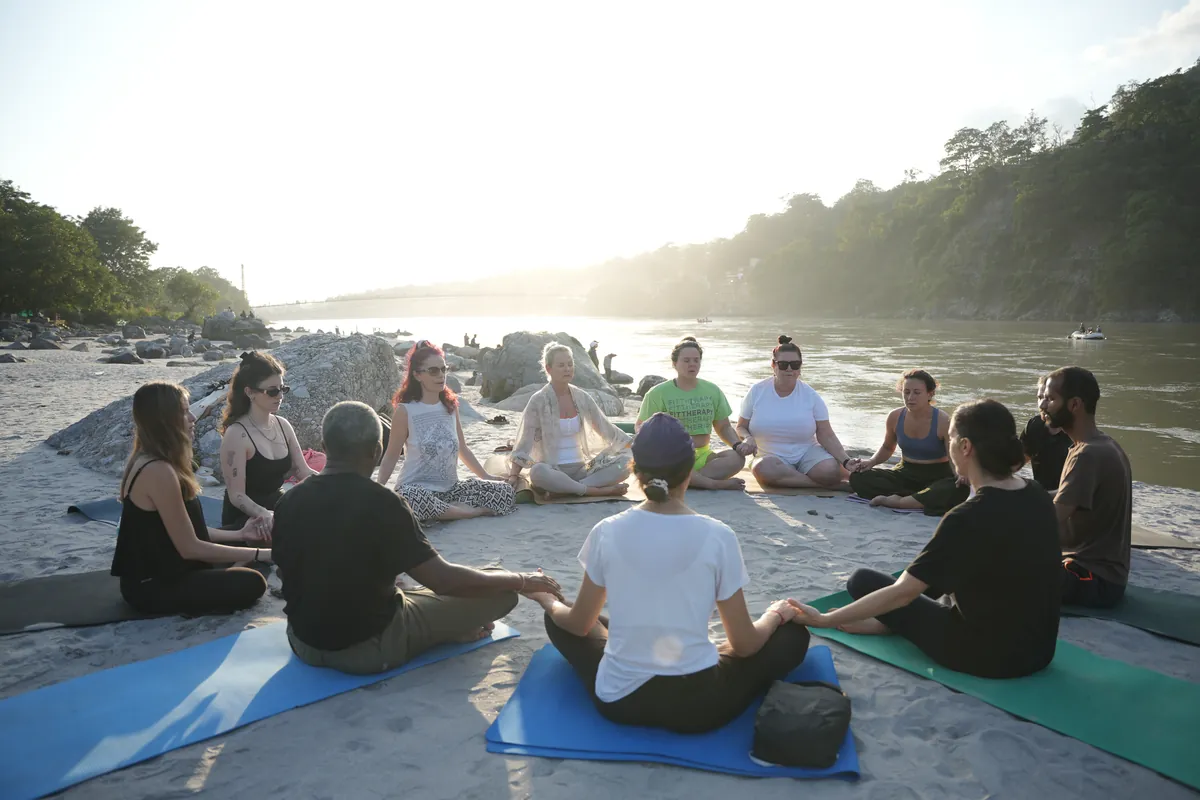
Yoga for mind, body and soul
Breathe, stretch, balance, blossom. Seekers from all over the world practise with us beside Mother Ganga.
Not sure which course fits your budget and level?
Talk to a teacher before you book. You will get a straight answer about which course actually suits you, and no pressure to take it.

