Should I Choose a Small Yoga School or a Large Yoga Teacher Training Academy?
Big academies and small ashrams both run good teacher trainings. Dr Gaurav Agrawal explains how batch size changes personal attention, teaching practice and daily life, and what to ask before you pay a deposit.

The short answer. Both can train you well. If personal attention, individual corrections and plenty of supervised teaching practice matter most to you, a small school with experienced teachers usually makes them easier to get. Whatever the size, check who will teach you, how often you will teach, the total fee and the school's current Yoga Alliance registration.
Imagine travelling thousands of miles to India with a dream of learning yoga, understanding its traditional philosophy and perhaps becoming a qualified yoga teacher.
You start researching yoga schools in Rishikesh. Some are large academies with impressive buildings and dozens of students, while others are smaller schools offering personal attention and a more intimate learning environment.
Naturally, you wonder: should I choose a small yoga school or a large yoga teacher training academy in Rishikesh?
It is an important decision. You will spend around 25 days or more practising, studying, eating and living with the people at your chosen school. Your experience will depend not only on the syllabus but also on the teachers, the learning environment and the support you receive.
Both small and large yoga schools can offer excellent education. However, if personal attention, individual guidance and meaningful interaction with teachers are important to you, a smaller school may offer significant advantages.
Let's understand the differences before you make your decision.
1. Personal attention: will your teachers know you?
Consider two situations.
In the first, you join a yoga teacher training programme with 45–50 other students. The teacher demonstrates an asana, explains its alignment and moves to the next posture. You may have questions, but several students are waiting for attention.
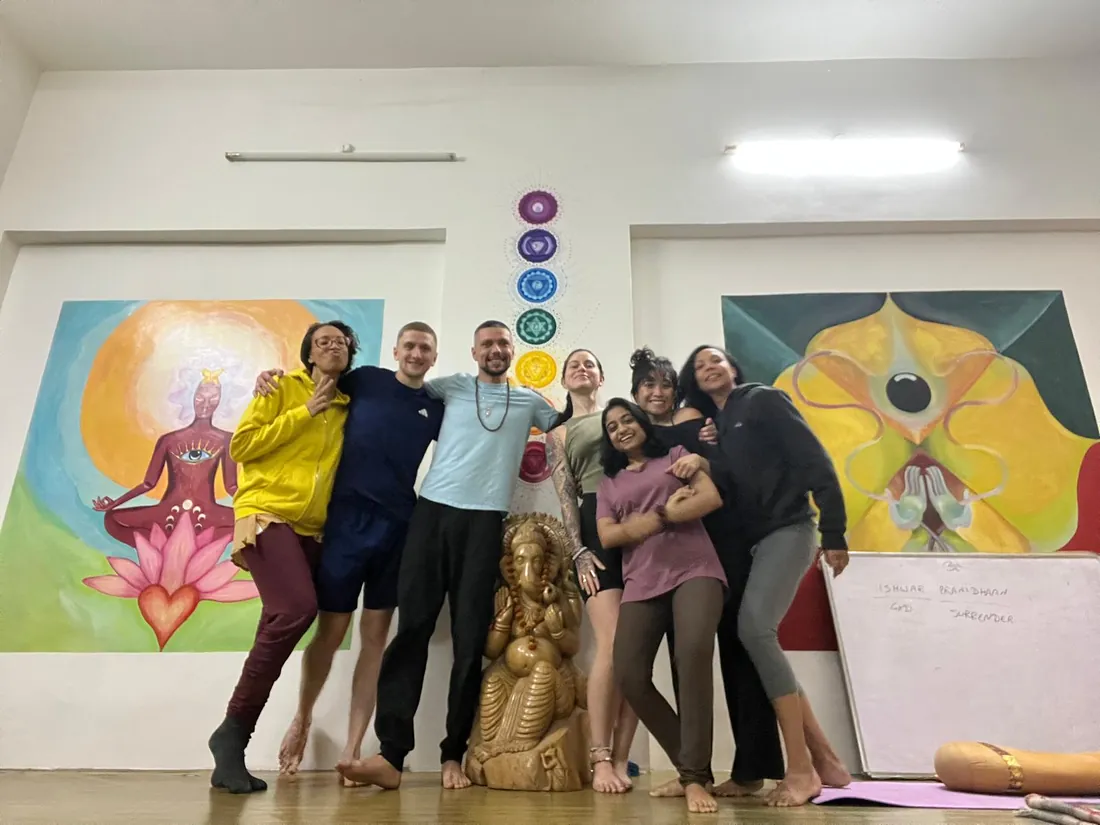
In the second, you join a batch of 10–12 students. Your teacher knows your name, understands your practice level and has more opportunities to observe your progress.
Which environment would help you learn more effectively? For many students, the smaller group offers a more comfortable learning experience.
Yoga is not simply a subject that can be learned by listening to lectures. It requires observation, correction, repetition and personal experience. A teacher needs to understand how you perform an asana, how you breathe and whether you are correctly following instructions.
In a smaller class, teachers generally have more opportunities to notice individual difficulties and provide guidance.
This does not mean that large academies cannot offer personal attention. However, you should ask how they organise individual corrections and feedback.
2. Teaching practice: are you learning to teach or just learning yoga?
This is particularly important if you are joining a 200-hour yoga teacher training course to become a professional yoga instructor.
Practising yoga and teaching yoga are two different skills.
You may perform several asanas confidently, but can you explain them to another person? Can you observe a student's limitations? Can you suggest modifications and conduct a balanced yoga class?
These abilities develop through teaching practice. A good yoga teacher training programme should provide opportunities to:
- Practise teaching individual postures.
- Guide fellow students through yoga sequences.
- Understand alignment and modifications.
- Prepare and conduct short yoga classes.
- Receive feedback from experienced teachers.
In a large batch, providing sufficient individual teaching opportunities can be challenging unless students are divided into smaller groups.
What to ask: “How many opportunities will I personally get to conduct a yoga class during the training, and will teachers provide individual feedback?”
This question is more important than the size of the yoga hall or the number of students shown in promotional photographs.
3. Does a large academy have better teachers?
Not necessarily.
A large yoga academy may have an extensive faculty, but that does not guarantee that its most experienced teachers will personally conduct your regular classes. Similarly, a small yoga school may have experienced teachers who have spent years studying and teaching traditional yoga.
What matters is who actually teaches you. Before choosing a yoga school in Rishikesh, find out:
- Who teaches Hatha, Ashtanga or Kundalini Yoga?
- Who conducts pranayama and meditation classes?
- Who teaches yoga philosophy and anatomy?
- How much teaching experience do the instructors have?
- Will senior teachers be involved throughout your course?
For international students, communication is equally important. A knowledgeable teacher should be able to explain traditional yoga concepts in clear English and patiently answer questions.
Remember, the quality of your education depends more on the teachers' knowledge, experience and teaching approach than on the size of the institution.
4. Will I feel comfortable in a small yoga school?
Travelling to India for the first time can be exciting, but it may also bring uncertainty. You might be unfamiliar with Indian food, local customs, the weather or the daily routine of an ashram. You may also be travelling alone and spending several weeks away from your family.
In such circumstances, the atmosphere of your yoga school matters. A smaller residential yoga school can provide more opportunities to interact with teachers and fellow students outside scheduled classes.
You may discuss yoga philosophy over a cup of tea, ask questions about meditation or share your experiences after a day of practice. Gradually, the school may begin to feel less like an institution and more like a learning community.
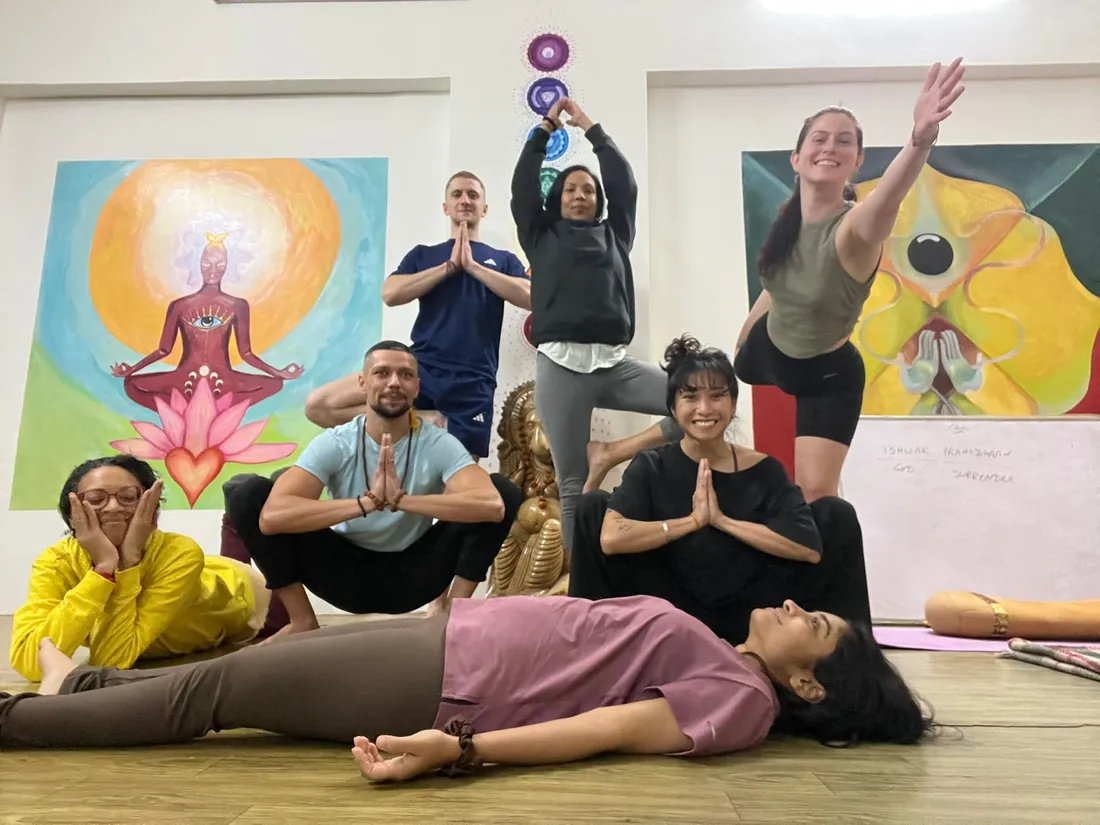
For many students, the friendships and personal connections developed during yoga teacher training become some of their most memorable experiences.
However, a friendly environment should always be supported by professional teaching standards, clear boundaries and respect for students' privacy.
5. Do large yoga schools offer better accommodation and facilities?
Not automatically.
Large academies may have extensive infrastructure, multiple yoga halls and larger accommodation facilities. However, a bigger campus does not necessarily mean better rooms, food or personal comfort. A smaller yoga school can also provide clean, comfortable and practical residential facilities.
When comparing yoga schools in Rishikesh, check:
- Private and shared accommodation options.
- Attached bathrooms and hot water.
- Clean drinking water.
- Wi-Fi availability.
- Daily meals and dietary arrangements.
- Laundry facilities.
- Quiet spaces for studying and meditation.
You will be practising and studying for several hours every day. Proper rest, nutritious food and comfortable accommodation are essential for maintaining your energy throughout the course.
Always request actual room photographs and a written list of facilities included in the course fee.
6. Is a small yoga school more expensive?
Not necessarily.
The price of a yoga teacher training course depends on several factors, including teacher experience, accommodation standards, food quality, location, curriculum and additional facilities.
Some large schools offer affordable courses because they accommodate more students. Smaller schools can also offer competitive prices through focused programmes and simpler infrastructure.
Instead of comparing only the advertised fee, compare the complete package. Ask whether the price includes:
- Tuition and practical training.
- Accommodation.
- Daily meals.
- Study materials.
- Certificate-related expenses.
- Excursions and additional activities.
- Any other compulsory charges.
A course advertised at USD 650 may not include everything, while another priced at USD 950 may include accommodation, meals and additional facilities. Neither price automatically represents better value.
Our advice: Choose a school that offers the right balance of teaching quality, personal attention, accommodation and transparent pricing.
7. Can a small yoga school provide Yoga Alliance certification?
Yes. The size of a yoga school does not determine its Yoga Alliance registration status.
If you are looking for a Yoga Alliance USA Registered Yoga School, verify the school's current registration directly through the official Yoga Alliance directory. Check its registration level and whether the programme meets the applicable requirements.
Also remember that Yoga Alliance registration is not a universal government licence to teach yoga. If you plan to work professionally in the USA, UK, Canada, Australia or Europe, check the expectations of employers, studios and insurers in your intended location.
Your practical teaching ability and the quality of your education are just as important as your certificate.
8. Small yoga school vs large yoga academy: a quick comparison
| Factor | Small yoga school | Large yoga academy |
|---|---|---|
| Batch size | Often 8–15 students | May have 20–50+ |
| Personal attention | Easier to provide | Depends on organisation |
| Teacher interaction | Often more direct | May be more structured |
| Teaching practice | Easier to organise individually | May require smaller groups |
| Facilities | Can be simple and comfortable | May offer extensive infrastructure |
| Student community | Often close-knit | Larger and more diverse |
| Course options | May be specialised | May offer more choices |
These are general tendencies, not guarantees. Actual teaching quality and facilities vary from school to school.
9. Who should choose a small yoga school?
A smaller yoga school may be the right choice if:
- You value personal attention and individual guidance.
- You want to develop confidence as a yoga teacher.
- You prefer asking questions and discussing yoga concepts.
- You are travelling to India for the first time.
- You want to understand yoga beyond physical postures.
- You appreciate a close-knit residential learning environment.
A large academy may be more suitable if you prefer extensive campus facilities, a larger student community and a more institutional learning environment.
There is no reason to reject a school simply because it is large. What matters is whether its teaching methodology matches your expectations.
10. Why Sri Yoga Ashram believes in small-group learning
At Sri Yoga Ashram, Rishikesh, we believe yoga education should be personal, meaningful and rooted in understanding. Our approach is based on a simple thought:
A teacher should know the student, not just the number of students in the class.
We generally maintain batches of approximately 10–12 students in our yoga teacher training programmes. This allows our teachers to become familiar with students' names, practice levels and individual learning needs.
We also believe that yoga is much more than physical exercise. Our programmes explore different dimensions of traditional yogic education, including:
- Hatha and Ashtanga Yoga.
- Kundalini and Yin Yoga.
- Pranayama and cleansing practices.
- Meditation and Yoga Nidra.
- Yoga philosophy.
- Anatomy and physiology.
- Teaching methodology and practical teaching.
The specific subjects depend on the programme selected.
A residential learning experience in Rishikesh
Sri Yoga Ashram is situated in the Laxman Jhula area of Rishikesh, surrounded by the natural environment of the Himalayan foothills.
Our residential facilities include private and twin-sharing accommodation options, attached bathrooms, hot water, Wi-Fi and filtered drinking water. Course packages include three vegetarian meals daily, according to the selected programme.
We welcome students from different countries and backgrounds. Our aim is to provide an environment where students can study traditional yoga, experience Indian culture and develop meaningful connections.

Explore our 200-Hour Yoga Teacher Training in Rishikesh to learn more about our programme. Already teaching and ready to go deeper? See the 300-Hour Yoga Teacher Training in Rishikesh.
You can also visit Sri Yoga Ashram's official website for other courses and information.
11. Final verdict: which yoga school should you choose?
If your priority is personal attention, individual guidance, teaching practice and meaningful interaction with your teachers, we recommend considering a genuinely small yoga school with experienced faculty and a well-structured curriculum.
A batch of approximately 10–15 students can offer a good balance between group learning and individual interaction.
However, do not choose a school simply because it advertises small batches. Check the teachers, curriculum, practical teaching opportunities, accommodation, reviews and total fees.
Your yoga teacher training is an investment in yourself. You deserve an environment where your questions are welcomed, your progress matters and your teachers are genuinely interested in helping you learn.
At the end of your journey, you should return home with more than a certificate. You should carry a deeper understanding of yoga, greater confidence in your practice and memories of the people who helped you grow.
Sometimes, the best learning experience does not come from the biggest institution. It comes from the place where your teachers have the time to know you, guide you and help you grow.
Frequently Asked Questions
Is a small yoga school better than a large academy in Rishikesh?
A small school may be better for students who value personal attention and direct teacher interaction. A large academy may suit those who prefer extensive facilities and a larger student community. Teaching quality should always be the main consideration.
What is the ideal batch size for 200-hour yoga teacher training?
There is no universally accepted ideal. However, approximately 10–15 students can provide a good balance between group interaction and individual guidance, provided there are sufficient qualified teachers.
Are small yoga schools in Rishikesh recognised by Yoga Alliance USA?
Some small schools are registered with Yoga Alliance USA. Always verify the school's current registration through the official directory rather than assuming that size determines recognition.
Can international students join a small yoga school?
Yes. Small residential schools can be suitable for international students who appreciate personal interaction and a supportive environment. Check English-language instruction, accommodation, meals and arrival arrangements before booking.
How many students are there in a batch at Sri Yoga Ashram?
Sri Yoga Ashram generally maintains batches of approximately 10–12 students to encourage personal interaction and individual guidance.
How can I choose the right yoga teacher training school in Rishikesh?
Compare faculty experience, curriculum, batch size, certification, teaching practice, accommodation, food, fees and student reviews. Speak directly with the school before paying your deposit. Our 12-point guide to choosing a yoga school in Rishikesh sets out every check.
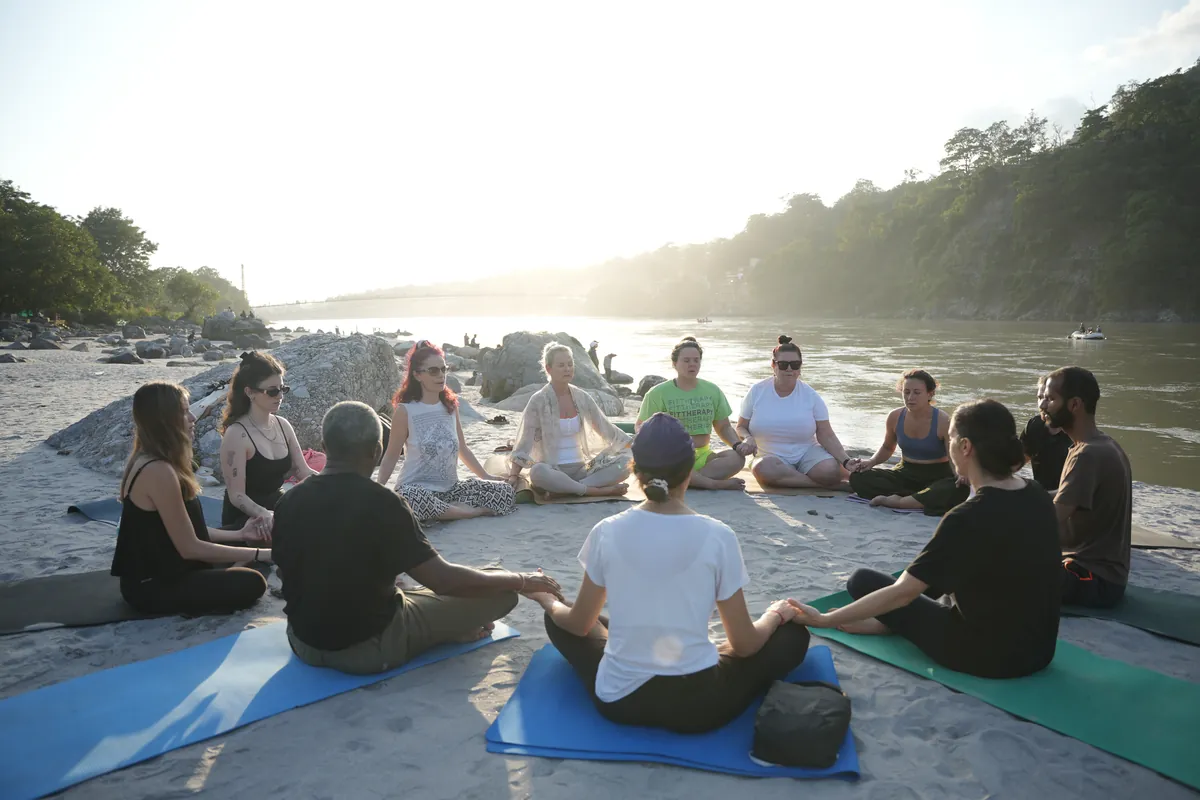
Yoga for mind, body and soul
Breathe, stretch, balance, blossom. Seekers from all over the world practise with us beside Mother Ganga.
Not sure which course fits your budget and level?
Talk to a teacher before you book. You will get a straight answer about which course actually suits you, and no pressure to take it.

