
Ashram vs Yoga Retreat vs Yoga Teacher Training in India: Which Experience Is Right for You?
An ashram stay, a yoga retreat and a yoga teacher training can all include yoga, meditation and vegetarian food, yet they are very different experiences. Here is how they differ, and how to choose the one that fits your reason for coming to India.

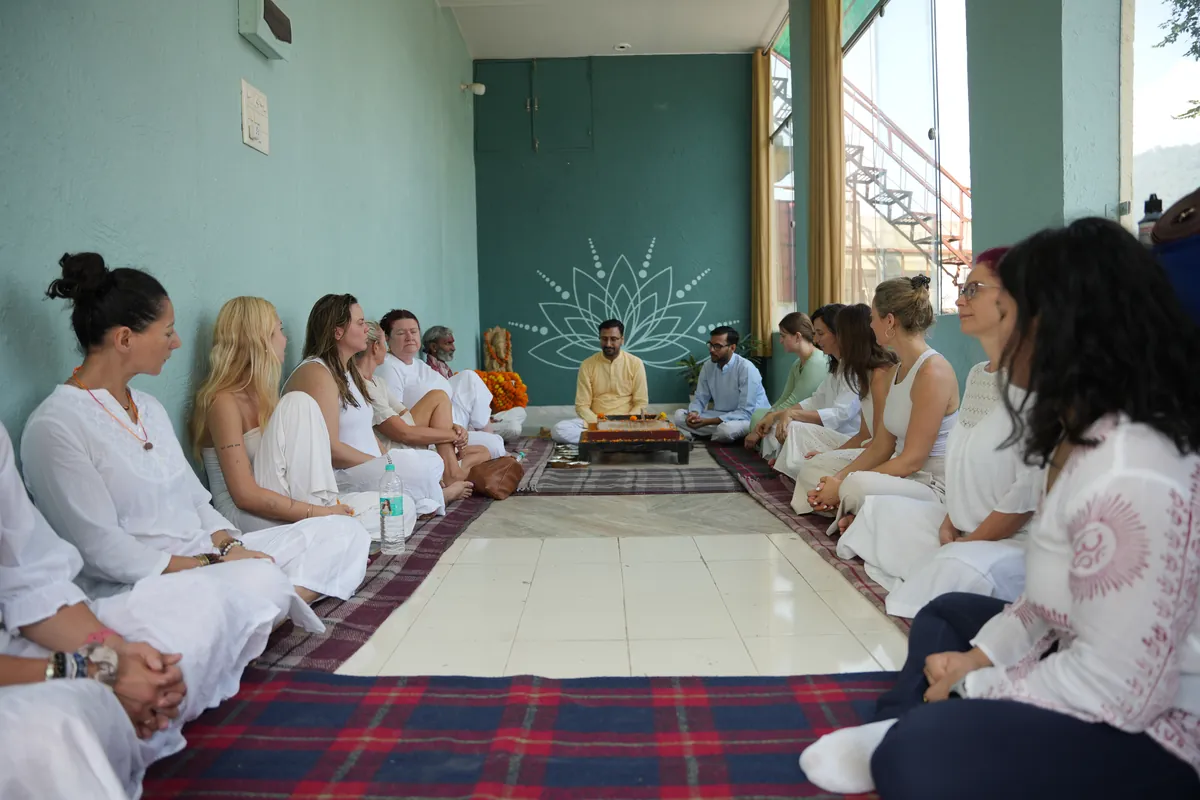
You want to experience yoga in India. But what exactly should you book?
An ashram stay, a yoga retreat, and a yoga teacher training course can all involve yoga, meditation, vegetarian food and spiritual practices. From a distance, they may look quite similar.
In reality, they can be completely different experiences.
A yoga retreat may give you time to relax and reconnect with yourself. An ashram stay can introduce you to a disciplined yogic lifestyle and spiritual environment. A Yoga Teacher Training course (YTT) is structured education designed to deepen your knowledge and develop teaching skills.
For international students planning their first yoga journey to India, choosing between them can be confusing.
At Sri Yoga Ashram in Rishikesh, we meet students with very different intentions. Some want professional yoga training. Some want Ayurveda treatments and rest. Others simply want to step away from normal life and experience yoga in India.
The right choice depends less on which option is "better" and more on why you are coming to India in the first place.
Here is how to decide.
First: What Is an Ashram?
The Sanskrit word ashram traditionally refers to a place devoted to spiritual practice, learning and a disciplined way of life.
Historically, an ashram was not a resort.
People came to study with a teacher, practise meditation, learn spiritual teachings, perform seva (selfless service) and live a relatively simple life.
Modern ashrams in India vary considerably.
Some remain highly traditional, with simple rooms, fixed schedules and strict rules. Others provide private accommodation, attached bathrooms, Wi-Fi and comforts that international travellers expect while still maintaining a yoga-focused environment.
So when a website says "ashram," don't assume you already know what your stay will be like.
Ask what the word means at that particular place.
What Is Daily Life in an Ashram Like?
An ashram stay usually has more structure than an ordinary holiday.
Depending on the ashram, your day might include:
- Morning yoga or meditation
- Pranayama
- Spiritual or philosophical teachings
- Vegetarian meals
- Evening meditation or chanting
- Seva or community activities
- Personal study and reflection
The emphasis is generally not entertainment.
An ashram creates an environment in which you temporarily step away from your usual routine and give greater attention to practice, learning and self-observation.
This is one reason living inside an ashram can feel very different from simply taking yoga classes while staying at a nearby hotel.
Who Should Choose an Ashram Stay?
An ashram experience may suit you if your main intention is to experience a yogic lifestyle rather than obtain a professional qualification.
It can be particularly meaningful if you are interested in meditation, philosophy, Indian spiritual traditions, simple living or spending time away from the pace of everyday life.
However, check the daily schedule carefully.
Some traditional ashrams expect significant participation and discipline. If what you actually want is sleeping late, spa treatments and sightseeing every afternoon, a retreat may be a much better match.
What Is a Yoga Retreat?
A yoga retreat is generally designed around wellness, practice, relaxation and rejuvenation.
There is usually a schedule, but it is commonly less academically demanding than teacher training.
A retreat might include morning yoga, pranayama, meditation, healthy meals, Ayurveda treatments, nature excursions and sufficient free time to rest or explore.
You practise yoga without having to prepare for teaching assessments or spend several hours studying anatomy and teaching methodology.
That distinction matters.
You can love yoga without wanting to become a yoga teacher.
Who Should Choose a Yoga Retreat?
Choose a retreat if you are thinking:
"I need a break."
Perhaps you have had a demanding year. Maybe you want to restart your yoga practice. You may want to improve your sleep, reduce screen time, experience Ayurveda, meditate more regularly or simply spend a week or two somewhere peaceful.
A retreat can also be an excellent first experience of India.
Instead of immediately committing to several weeks of intensive training, you can experience Rishikesh, Indian food, yoga classes and ashram life at a gentler pace.
A Retreat Does Not Have to Mean Doing Nothing
People sometimes imagine retreats as luxurious holidays with one gentle yoga class in the morning.
Some are.
Others are quite active.
At Sri Yoga Ashram, for example, Yoga and Ayurveda retreat programmes can combine yoga practices with Ayurvedic or wellness treatments and other activities.
A retreat can therefore be structured without becoming academic.
The important difference is the objective.
Teacher training asks: How do I understand, practise and eventually teach yoga?
A retreat asks: How can yoga and related practices support my own well-being and experience?
What Is Yoga Teacher Training?
A Yoga Teacher Training course, usually called a YTT, is fundamentally an educational programme.
A typical 200-hour training may include subjects such as:
- Asana practice and alignment
- Pranayama
- Meditation
- Yoga philosophy
- Anatomy and physiology
- Teaching methodology
- Class sequencing
- Practical teaching
- Ethics and yogic lifestyle
The exact curriculum varies between schools and styles.
Some programmes focus primarily on Hatha and Ashtanga Yoga. Others may specialise in Kundalini, Vinyasa, Yin or other approaches.
The important point is that teacher training involves considerably more than attending yoga classes.
Do You Have to Want to Become a Yoga Teacher?
Interestingly, no.
A significant number of people take a 200-hour teacher training because they want to understand yoga more deeply, even if they have no immediate intention of teaching professionally.
For them, the word "teacher" in teacher training can be slightly misleading.
The programme teaches you how to teach, but the education can also transform your personal practice.
If you have spent years following instructions in yoga classes and now find yourself asking:
Why are we doing this?
What does this posture actually do?
How should it be modified?
What is pranayama really about?
What does yoga philosophy say about the mind?
How would I explain yoga to another person?
If so, teacher training may be appropriate even if becoming an instructor is not your immediate career goal.
Who Should Choose Yoga Teacher Training?
A YTT may suit you if you want depth and structure.
Choose it if you want to study yoga systematically, develop a disciplined practice, understand philosophy and anatomy, learn how to construct and teach a class, or work towards becoming a yoga teacher.
But don't choose teacher training simply because you think it is a more impressive version of a retreat.
The schedules are different, and so are the expectations.
If your body and mind are asking for rest, enrolling in an intensive training programme may be the opposite of what you need.
Ashram vs Yoga Retreat vs Yoga Teacher Training: The Main Differences
| Feature | Ashram Stay | Yoga Retreat | Yoga Teacher Training |
|---|---|---|---|
| Main purpose | Spiritual/yogic living | Wellness and rejuvenation | Education and teacher development |
| Yoga practice | Usually | Yes | Intensive |
| Meditation | Often important | Usually included | Usually included |
| Yoga philosophy | Often | Sometimes | Structured study |
| Anatomy | Usually limited | Rarely | Usually included |
| Teaching methodology | No | No | Yes |
| Teaching practice | No | No | Yes |
| Ayurveda treatments | Depends on ashram | Often available in Ayurveda retreats | Usually not the main focus |
| Free time | Varies | Generally more | Generally less |
| Certification | Usually no | Usually no professional qualification | Usually yes |
| Best suited for | Spiritual immersion | Rest and personal wellness | Deep study and teaching skills |
These are general differences rather than universal rules. Every ashram, retreat and training school creates its programmes differently, so always examine the actual schedule before booking.
What About a Yoga + Ayurveda Retreat?
There is another option that deserves special attention in India.
A Yoga and Ayurveda retreat combines yoga practice with India's traditional system of Ayurveda.
Depending on the programme, this may include consultation with an Ayurveda practitioner and treatments such as Abhyanga, Shirodhara, herbal therapies or other therapies selected according to the programme and individual needs.
This combination can be particularly attractive to international visitors who want more than a conventional yoga holiday but do not want the academic intensity of teacher training.
You can practise yoga in the morning, receive treatments during the day, eat vegetarian meals, meditate and still have time to rest.
For someone coming to India primarily for rejuvenation rather than certification, this can be an excellent middle path.
What If I Want Both Yoga Teacher Training and Ayurveda?
Then you need to look beyond a conventional 200-hour YTT.
Some programmes combine yoga education with Ayurveda study or therapy training.
This can be valuable for students interested in a broader understanding of Indian approaches to health and wellness.
But look carefully at what is actually being offered.
Ask:
How many hours are genuinely dedicated to Ayurveda?
Are there practical sessions?
Who teaches the Ayurveda portion?
Is it simply a few introductory lectures, or is Ayurveda an important part of the curriculum?
The word "Ayurveda" in a course title does not automatically tell you how deeply it is studied.
Hotel-Based Yoga Course vs Residential Ashram Training
This is another distinction international students sometimes overlook.
Imagine two courses with similar yoga schedules.
In the first, you attend classes and return to an independent hotel every evening.
In the second, you live where you study, eat with your classmates, see your teachers outside formal classes and remain in the yoga environment throughout the course.
Technically, both might offer yoga training.
Experientially, they can be very different.
Residential training reduces many everyday decisions. You don't need to find breakfast, commute to class, arrange transportation several times a day or constantly switch between "course life" and "tourist life."
This immersion is one of the reasons many students specifically travel to India for yoga teacher training rather than completing a course closer to home.
Should I Choose a Traditional or Comfortable Ashram?
You don't necessarily have to choose.
There is sometimes a false assumption that authentic yoga requires uncomfortable living conditions.
A hard mattress does not automatically produce enlightenment.
Neither does Wi-Fi destroy spiritual practice.
What matters is whether the environment supports the purpose for which you came.
Some students actively want an extremely traditional, minimalist ashram experience. Others practise and study much better when they have a private bathroom, hot water, good food and a comfortable place to sleep.
Know yourself.
Choosing appropriate accommodation is not a failure of spirituality.
What About Travelling Alone?
Solo travellers can choose any of the three options.
However, a residential retreat or teacher training programme can make a first solo trip to India easier because much of your daily structure is already organised.
You have accommodation.
You know where your meals are coming from.
You have a schedule.
You meet other students.
You have people to ask when you are unsure about something.
This can provide a useful balance: you are travelling independently, but you are not isolated.
How Much Time Should I Spend in India?
Your available time can determine which experience makes sense.
If you have only one week, a retreat is usually more realistic than comprehensive teacher training.
With two weeks, you can have a substantial retreat or ashram experience.
If you have approximately three to four weeks, a residential 200-hour teacher training becomes possible at schools that offer intensive formats.
If you have longer, you can combine experiences.
For example, some students arrive before their YTT to recover from travel and become familiar with Rishikesh. Others stay afterwards for Ayurveda treatments, personal practice, sightseeing or simply some quiet time after an intensive course.
You don't have to make every day of your trip educational.
Sometimes a few unstructured days are valuable.
Ask Yourself These Five Questions Before Booking
Before comparing schools and prices, ask yourself:
1. Why am I actually going to India?
Is it to become a teacher, deepen your yoga practice, improve your well-being, experience Indian spirituality, recover from stress, or simply explore something new?
Be truthful with yourself.
2. How much structure do I want?
If you enjoy schedules and intensive learning, YTT may suit you.
If you want practice combined with freedom, consider a retreat.
If spiritual discipline and community living attract you, explore an ashram stay.
3. Do I need a certificate?
If professional yoga teaching is your goal, certification and the structure of the training matter.
If not, don't pay for teacher training merely to receive a certificate you don't need.
4. How much free time do I want?
This question is more important than it sounds.
Some students imagine spending afternoons exploring cafés and waterfalls while simultaneously completing an intensive YTT.
Your course schedule may have other ideas.
Read it before booking.
5. What kind of experience will I remember?
Think beyond the brochure.
When you return home, what do you hope happened?
Perhaps you finally established a meditation practice.
Perhaps you learned enough to teach your first yoga class.
Perhaps your body simply feels rested again.
Perhaps you experienced living in an Indian ashram.
Your answer often tells you which programme you actually need.
Can You Combine All Three Experiences?
Yes, and this can be one of the advantages of choosing the right residential yoga centre.
Sri Yoga Ashram is an ashram environment, but students come for different purposes.
One person may be completing a 200-hour Yoga Teacher Training, while another has come for a Yoga and Ayurveda retreat.
The surroundings may be shared, but their schedules and objectives are different.
Some international students can also structure a longer visit, for example:
arrive → settle into Rishikesh → complete teacher training → spend additional days relaxing or receiving Ayurveda treatments → travel home.
This can work particularly well for someone travelling a long distance to India.
If you are flying from Europe, North America or Australia, you may appreciate not having to rush directly from an intensive final training day to an international airport.
What Is the Experience Like at Sri Yoga Ashram?
Sri Yoga Ashram was established in Rishikesh in 2016 and is located in the Laxman Jhula area.
Our approach is residential and relatively small-scale.
Yoga training groups are generally around 10–12 students, rather than very large batches.
Students can choose programmes according to their objectives, including Yoga Teacher Training, meditation-focused study, Yoga and Ayurveda programmes, and wellness retreats.
Accommodation is available with attached bathrooms, hot water, Wi-Fi and filtered drinking water. Vegetarian meals are served, and students live within the ashram environment rather than commuting to classes from different parts of the city.
The ashram is surrounded by the natural character of Rishikesh, with forest nearby and views towards the Ganga.
But facilities should not be the only reason you choose any yoga school.
Before booking with us (or anyone else), look carefully at the teachers, curriculum, schedule, class size, accommodation, location, inclusions and purpose of the programme.
The right yoga experience is the one that matches the reason you are coming.
Frequently Asked Questions
Is an ashram the same as a yoga retreat?
No. An ashram is traditionally a place for spiritual practice and disciplined living, whereas a yoga retreat is generally a temporary programme focused on yoga, wellness and rejuvenation. However, modern centres sometimes combine elements of both.
Is yoga teacher training more difficult than a yoga retreat?
Generally, yes. Teacher training normally involves a fuller daily schedule, theoretical classes, practical study, teaching methodology and attendance requirements. A retreat usually provides more time for relaxation.
Can I stay at an ashram without becoming a yoga teacher?
Yes. Teacher training is only one reason to visit an ashram. Depending on the centre, you may be able to join retreats, meditation programmes, Ayurveda programmes or other residential experiences.
Can beginners join a yoga retreat in Rishikesh?
Many retreats are suitable for beginners. Always check the specific programme because intensity varies considerably between centres.
Should I do a yoga retreat before teacher training?
It is not necessary, but it can be helpful if you have never visited India or experienced residential yoga before. A retreat allows you to experience the environment without immediately committing to an intensive teacher-training schedule.
Is a 200-hour YTT only for people who want to teach?
No. Some students complete teacher training primarily to deepen their personal understanding of yoga. However, because YTT includes subjects such as teaching methodology and practical teaching, people interested only in relaxation may find a retreat more appropriate.
Is an Ayurveda retreat the same as Panchakarma?
No. A Yoga and Ayurveda retreat may include selected Ayurvedic treatments, whereas Panchakarma is a specific classical Ayurvedic therapeutic process that should be planned according to the individual and supervised appropriately. Do not assume that every programme advertised as an Ayurveda retreat is Panchakarma.
How do I choose a genuine yoga experience in India?
Look beyond photographs and price. Examine the teachers' backgrounds, actual daily schedule, class size, curriculum, accommodation, what is included, student expectations and whether the programme's purpose matches your own.
So, Which One Should You Choose?
There is no single correct answer.
If you want rest, yoga and wellness, a Yoga Retreat may fit your purpose.
If you want spiritual immersion and experience of yogic living, consider an Ashram Stay.
If you want structured education, deeper study and the ability to teach, consider Yoga Teacher Training.
If you want yoga together with traditional wellness treatments, explore a Yoga + Ayurveda Retreat.
And if you are still unsure, don't begin by asking:
"Which programme is best?"
Ask:
"What do I want to be different when I return home?"
That question usually makes the decision much easier.
Compare our programmes: the 200 Hour Yoga Teacher Training, the 12-day Yoga and Wellness Retreat and the Holistic Yoga and Ayurveda Therapist Training.
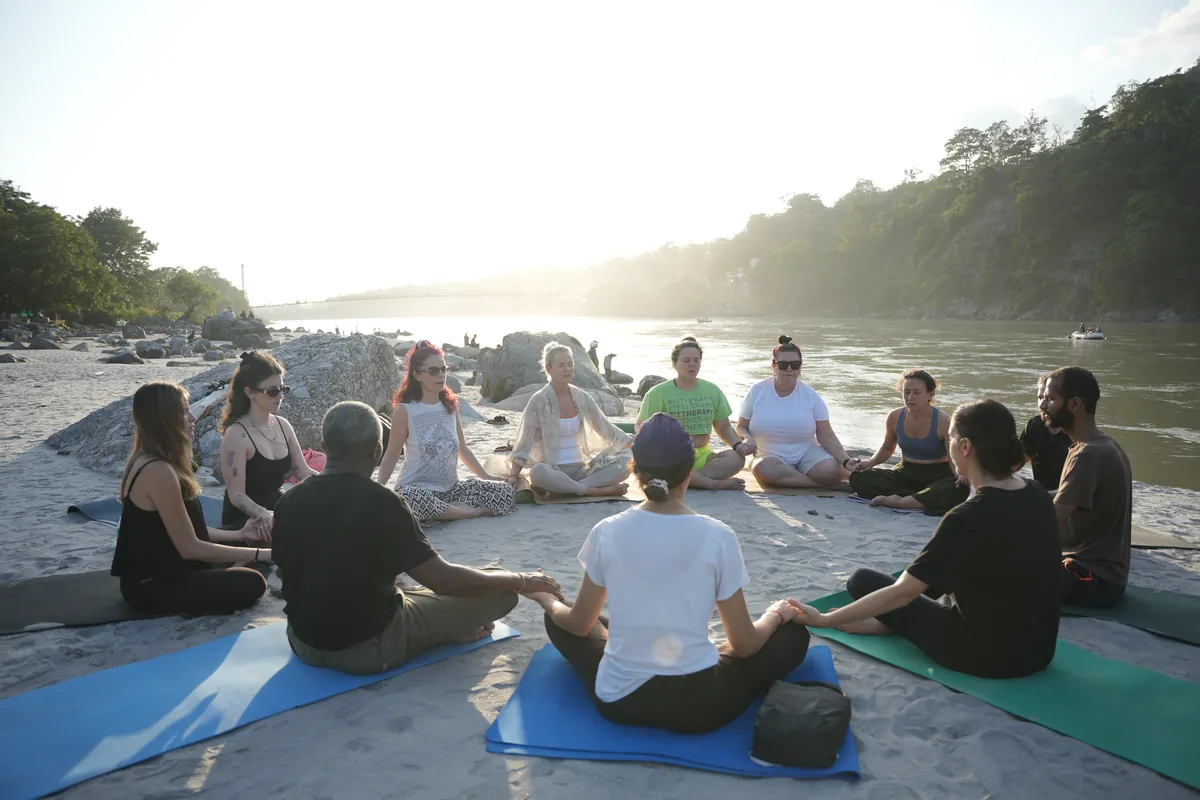
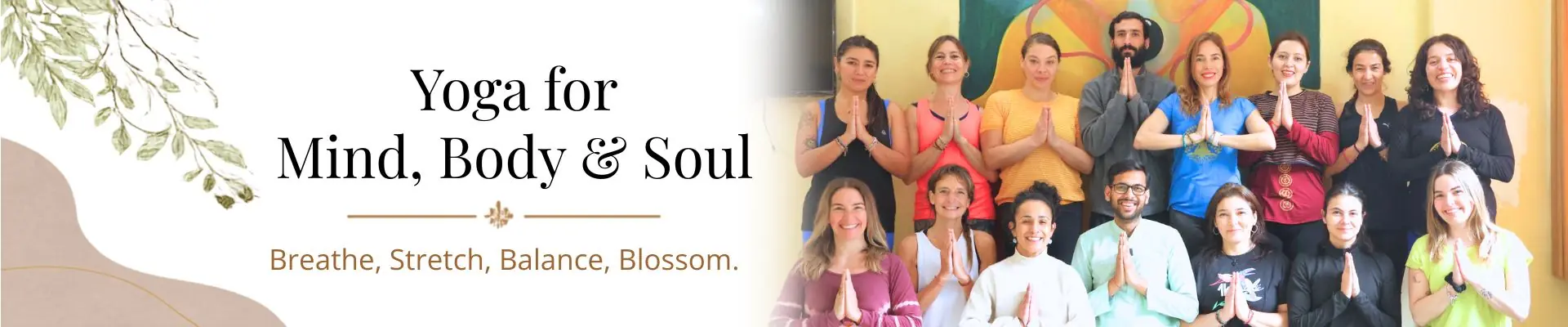
Yoga for mind, body and soul
Breathe, stretch, balance, blossom. Seekers from all over the world practise with us beside Mother Ganga.
Not sure which course fits your budget and level?
Talk to a teacher before you book. You will get a straight answer about which course actually suits you, and no pressure to take it.

