

Yoga Teacher Training in India for Western Students: What Nobody Tells You Before Coming to Rishikesh
Your first yoga teacher training in India raises questions that are hard to ask before booking. Dr Gaurav Agrawal answers them honestly: flexibility, food and water, weather, visas, ashram life, solo travel and the difficult days.

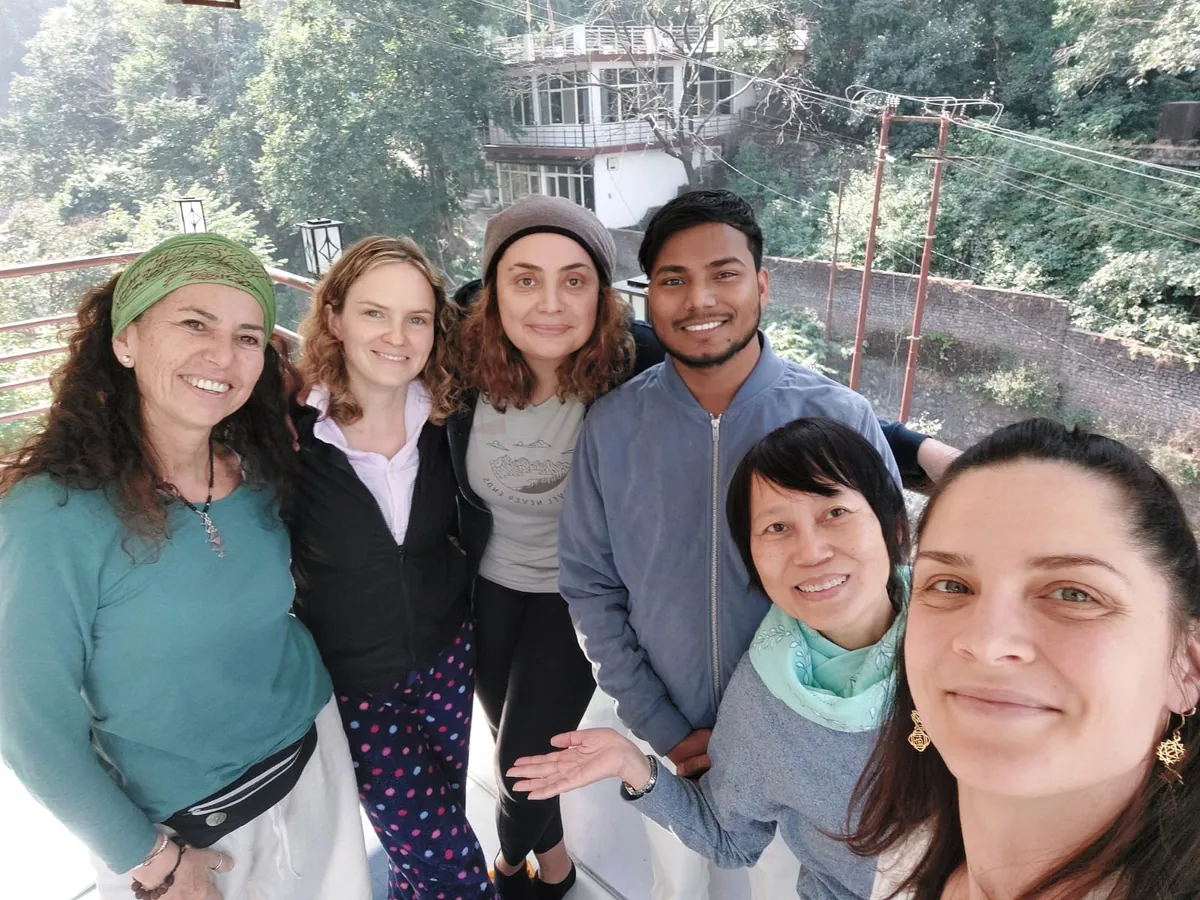
For many Western students, travelling to India for yoga teacher training is much more than enrolling in a course. It may be their first journey to India, their first experience of ashram life, and sometimes their first time spending several weeks away from the comforts and routines of home.
Rishikesh attracts yoga students from the USA, UK, Canada, Europe, Australia and many other parts of the world. Yet before booking a course, international students often have questions they hesitate to ask:
Is India safe for a solo traveller? Will I get sick from the food? What will the accommodation really be like? Do I need to be an advanced yogi? Will I cope with such an intensive schedule? What if India feels overwhelming?
These are sensible questions.
At Sri Yoga Ashram in Rishikesh, we have welcomed international yoga students for many years. Based on that experience, here are some things we believe every Western student should know before coming to India for yoga teacher training.
1. You Do Not Need to Be an Advanced Yogi
One of the biggest misconceptions about a 200-hour yoga teacher training in India is that you must already be highly flexible or capable of performing advanced asanas.
You don't.
Yoga teacher training is a training programme. You are coming to learn.
Students arrive with very different backgrounds. Some have practised yoga for many years, while others have only a basic practice. Some are naturally flexible; others struggle to touch their toes.
A good yoga teacher training should help you understand your own body and gradually develop your practice rather than forcing you to imitate somebody else's.
Your sincerity, discipline and willingness to learn are ultimately more important than how advanced your asanas look on the first day.
2. Yoga Teacher Training Is More Intense Than a Yoga Retreat
This surprises some students.
A yoga retreat is generally designed around relaxation, wellness and having sufficient free time. A teacher training course has a very different purpose.
Your day may begin early in the morning and include asana, pranayama, meditation, philosophy, anatomy, teaching methodology, alignment, practical teaching and self-study.
By the second week, students sometimes discover that the challenge isn't performing another asana: it is maintaining concentration and enthusiasm day after day.
This intensity is also what makes residential training special.
For several weeks, your daily life revolves around yoga. You eat, practise, study and live alongside people who have travelled from different countries for essentially the same purpose.
It creates an environment that is difficult to reproduce in a weekend course at home.
Still deciding between a retreat and a training? Read Ashram vs Yoga Retreat vs Yoga Teacher Training in India to see which one fits your reason for coming.
3. India Will Probably Feel Different: Give Yourself Time
India can be intense for a first-time visitor.
Traffic behaves differently. Streets can be busy. Cows may be standing where you expect vehicles to be. Temples, bells, scooters, monkeys, street vendors and religious ceremonies can all exist within the same few hundred metres.
For some Western visitors, the first couple of days are fascinating but slightly overwhelming.
Don't judge your entire experience by your first 24 hours.
Rishikesh gradually develops its own rhythm. Once you know the neighbourhood, find your favourite walk and settle into your yoga schedule, the environment that initially seemed chaotic can start feeling surprisingly familiar.
This adjustment itself can become part of travelling and studying in India.
4. Rishikesh Is Not the Same as a Large Indian City
Students sometimes imagine Rishikesh based on videos of Delhi or Mumbai.
The experience is quite different.
Rishikesh sits beside the Ganga at the foothills of the Himalayas and has been associated with yoga, meditation and spiritual practice for generations. Yoga schools, temples, ashrams, cafés and travellers from around the world are part of everyday life here.
Sri Yoga Ashram is located in the Laxman Jhula area of Rishikesh, with the Ganga nearby and forest around the ashram.
This means students can experience India while living in an environment specifically suited to yoga practice.
5. You Don't Have to Become a Different Person to Live in an Ashram
The word “ashram” sometimes creates an unrealistic image in the minds of international students.
They imagine complete silence, sleeping on the floor, giving up their phones, or following a highly restrictive religious lifestyle.
Ashrams vary enormously.
A modern residential yoga ashram can combine traditional yoga discipline with comfortable accommodation. What matters is respecting the atmosphere of the place.
At Sri Yoga Ashram, students have accommodation with attached bathrooms, hot water, Wi-Fi and filtered drinking water. Vegetarian meals are provided, and students live close to their teachers and fellow trainees.
You are not expected to abandon your personality or beliefs.
You are simply entering an environment where yoga, learning and mindful living become the focus of your day.
6. Indian Food May Be Different From the Indian Food You Know at Home
Many international students arrive expecting restaurant-style Indian food every day.
Ashram food is generally different.
Food during intensive yoga practice should support the body rather than leave you feeling heavy. Meals therefore tend to be vegetarian and comparatively simple.
You may eat rice, dal, vegetables, chapati, salads, fruits and other freshly prepared dishes.
If you normally consume a lot of meat, processed food, alcohol, coffee or sugar, the dietary change can initially feel significant.
Give your body a little time to adjust.
It is also sensible to inform your school in advance about genuine allergies or important dietary restrictions.
7. Drinking Water Deserves More Attention Than Food
One simple rule can prevent many problems:
Do not drink untreated tap water in India.
Use properly filtered or packaged drinking water.
At Sri Yoga Ashram, RO-filtered drinking water is available for students, so carrying a reusable bottle is useful.
When outside the ashram, especially during excursions or travel days, pay attention to your drinking water rather than assuming every water source is suitable.
Basic precautions make travelling in India much easier.
8. Your Stomach May Need Time to Adjust
Even when food is hygienically prepared, your digestive system is encountering different ingredients, spices and microorganisms from those it normally experiences.
For the first few days, eat reasonably rather than trying everything you see.
Wash your hands regularly, drink safe water and be particularly careful when experimenting with street food.
Students with regular prescription medicines should bring an adequate supply and keep them in their original packaging. A small personal travel-health kit is also useful.
9. Bring Less Than You Think You Need
Students frequently arrive with enormous suitcases and discover that they use half of what they packed.
For a yoga teacher training in Rishikesh, practical clothing is more useful than fashionable clothing.
Bring comfortable yoga clothes, loose casual clothes, a light shawl or scarf, sandals, walking shoes, personal toiletries, prescription medicines, a reusable water bottle, a notebook and a suitable power adapter.
Add warmer layers if you are travelling in winter.
You can buy most ordinary necessities in Rishikesh, so forgetting a small item is rarely a disaster.
10. Dress Comfortably, but Remember Where You Are
Rishikesh receives international travellers throughout the year and is accustomed to Western visitors. At the same time, it remains an important spiritual and pilgrimage town.
There is no need to completely change how you dress, but modest clothing is appreciated, particularly when visiting temples, ceremonies and traditional areas.
Yoga clothing suitable inside a yoga hall may not always be the most appropriate clothing for walking through a temple.
A lightweight scarf or shawl is one of the most useful things an international student can carry.
11. Rishikesh Weather Can Surprise You
India is not always hot.
Rishikesh has distinct seasons because of its location near the Himalayan foothills.
October and November generally bring pleasant post-monsoon conditions, while winter mornings in December and January can become quite cool. February and March are popular because conditions become warmer without the intense heat of late spring and early summer. The monsoon months bring rain, humidity and exceptionally green surroundings.
If you are travelling from Northern Europe, Canada or another colder country, don't automatically assume you won't need warm clothing simply because you are going to India.
Check the season before packing.
12. Wi-Fi Exists, But Consider Using It Less
Most Western students understandably want internet access to contact family, manage travel arrangements or continue necessary work.
Sri Yoga Ashram provides Wi-Fi.
But there is another side to this.
A yoga teacher training is one of the rare opportunities in modern life to spend several weeks concentrating on yourself.
If every free moment becomes Instagram, WhatsApp, work email and news from home, part of that opportunity disappears.
You don't have to disconnect completely.
Simply consider connecting a little less.
13. Solo Travellers Are Very Common
Many international students come to Rishikesh alone.
That can feel intimidating while booking the flight, but residential teacher training naturally creates a community.
You practise together, eat together, attend lectures together and gradually get to know one another.
Students who arrived knowing nobody often leave with close friends living in completely different countries.
Nevertheless, normal travel precautions still apply. Keep valuables secure, avoid isolated places late at night, use reliable transportation and let someone know your plans when travelling independently.
Being spiritually minded doesn't mean abandoning ordinary common sense.
14. Culture Shock Works in Both Directions
You will notice things about India that feel unusual.
Indian teachers and staff may also notice things about Western culture that feel unusual to them.
Small misunderstandings sometimes happen simply because people communicate differently.
One of the best approaches is curiosity.
Instead of immediately deciding that something is “wrong,” ask why it is done that way.
Yoga training in India can therefore become cultural education as well as yoga education.
15. Your Teachers May Teach Differently From Western Fitness Instructors
Traditional Indian yoga education does not always follow the format of a Western fitness class.
You may spend significant time studying philosophy, breathing techniques, meditation, cleansing practices, anatomy, alignment and teaching methodology in addition to asana.
A teacher may also ask you to repeat something many times.
That repetition is intentional.
Teacher training is not simply about collecting information. It is about turning knowledge into practice until you can eventually communicate it to somebody else.
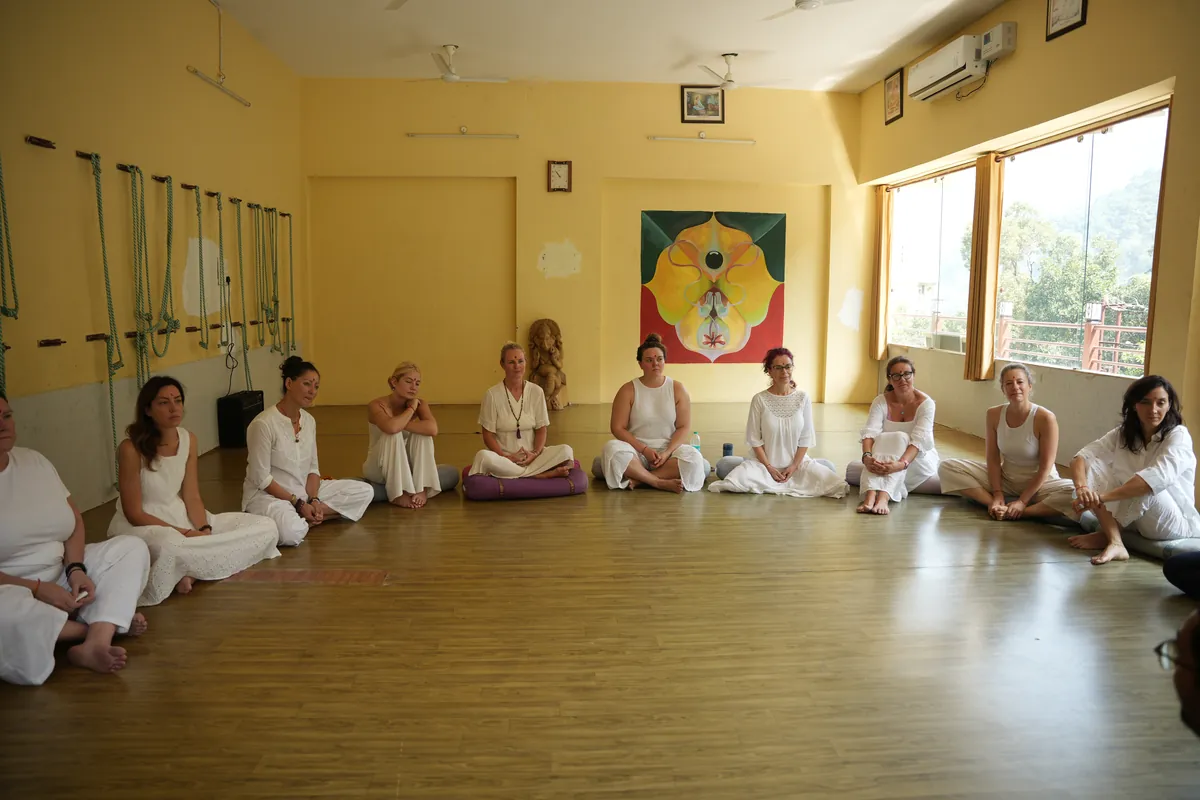
16. You May Discover That Yoga Is Much Bigger Than Asana
This is perhaps the most important surprise.
Many students initially choose teacher training because they love physical yoga.
Then they encounter pranayama.
Meditation.
Yoga philosophy.
Mantra.
Mudra.
Anatomy.
Teaching methodology.
Yogic lifestyle.
Sometimes the subject a student expected to enjoy least becomes the most meaningful part of the course.
Coming to India provides an opportunity to study yoga not simply as physical exercise, but as a much broader system of self-development.
17. You Will Probably Have Difficult Days
Not every day of yoga teacher training feels transformational.
Some mornings you may be tired.
Your muscles may ache. You may miss your normal food. You may feel frustrated with an asana. You might disagree with another student or simply want an afternoon alone.
This is normal during an intensive residential programme.
Transformation does not necessarily mean feeling wonderful every day.
Learning how to observe discomfort without immediately running away from it can itself become part of the practice.
At the same time, yoga training should never require you to ignore genuine injury or illness. Communicate with your teachers and respect your body's limitations.
18. Don't Come to India Only for the Certificate
Of course, certification matters if your goal is to teach professionally.
But if your entire objective is to collect a certificate as quickly as possible, you may miss the most valuable part of studying yoga in India.
Use the opportunity to ask questions.
Talk with your teachers.
Observe how yoga fits into Indian life.
Visit the Ganga.
Attend Ganga Aarti.
Walk through Rishikesh.
Sit quietly sometimes without trying to accomplish anything.
The certificate marks the completion of a course. The experience surrounding it is what many students remember years later.
19. Check Your Visa Carefully Before Booking Flights
Visa rules deserve special attention because not every yoga programme is treated identically.
India's official e-Visa information includes short-term yoga programmes among permitted purposes, but it also places conditions on short-term courses and distinguishes programmes that are formal or structured or that issue qualifying certificates or diplomas.
Therefore, do not rely solely on a yoga school's blog (or any general travel blog) to decide which visa category applies to your particular course.
Before purchasing non-refundable flights, check the current requirements on the official Government of India visa website and, where necessary, confirm the appropriate category with the relevant Indian mission or consulate.
Visa rules can change, and your nationality and type of programme matter.
20. Arrive With Expectations, But Leave Some Space for India
Research your yoga school carefully.
Check the curriculum, teachers, accommodation, meals, class size, location, certification and what is actually included in the fee.
Ask questions before paying your deposit.
But once you have done your research, leave a little space for the unexpected.
India rarely behaves exactly as a first-time visitor imagines it will.
And that isn't necessarily a bad thing.
Some of the most memorable experiences happen outside the timetable: an unexpected conversation with a teacher, walking beside the Ganga after class, watching the Himalayas from a rooftop, sharing tea with classmates, hearing temple bells in the distance, or simply noticing how different you feel after several weeks of disciplined practice.
What Is Yoga Teacher Training at Sri Yoga Ashram Like?
Sri Yoga Ashram is located in Laxman Jhula, Rishikesh, surrounded by the natural environment of the Himalayan foothills.
Our residential teacher training programmes are deliberately kept relatively small, generally around 10–12 students, so teachers and students have opportunities for personal interaction.
Depending on the programme, students can study traditional subjects including Hatha Yoga, Ashtanga Yoga, Kundalini Yoga, pranayama, meditation, philosophy, anatomy, alignment and teaching methodology.
Accommodation and vegetarian meals are available as part of residential programmes, allowing students to concentrate on their practice rather than organising everyday logistics.
But perhaps the biggest advantage of coming to Rishikesh is not something we can put into a syllabus.
You are learning yoga in an environment where yoga is part of the culture surrounding you.
Frequently Asked Questions
Is yoga teacher training in India suitable for beginners?
Yes, many 200-hour programmes accept students who are not advanced practitioners. However, having some regular yoga experience before beginning an intensive course is helpful. Check the entry requirements of the particular programme before enrolling.
Can I come to Rishikesh alone?
Yes. Many international yoga students travel alone and meet their classmates after arriving. Normal precautions appropriate to international travel should still be followed.
Do I need to speak Hindi?
No. International yoga teacher training programmes in Rishikesh are commonly conducted in English. Learning a few Hindi words can nevertheless make everyday interactions more enjoyable.
Can Western students handle Indian food during a month-long course?
Most do. Residential yoga schools generally serve comparatively simple vegetarian meals rather than very heavy restaurant food. Students with allergies or important dietary requirements should discuss them with the school before booking.
What is the best time to do yoga teacher training in Rishikesh?
For many international students, February–April and September–November provide comfortable conditions for yoga practice. Winter can be considerably cooler than visitors expect, while late spring becomes hot and the monsoon brings substantial rainfall. Choose according to your own tolerance for heat, cold and rain rather than assuming there is one perfect month for everyone.
How many clothes should I bring for yoga teacher training?
Enough comfortable clothing for several days is generally sufficient if laundry is available. Prioritise breathable yoga clothes, modest casual clothing and layers appropriate to the season rather than bringing a very large wardrobe.
Is Wi-Fi available during yoga teacher training?
This depends on the school. Sri Yoga Ashram provides Wi-Fi for residential students, although students may find that consciously reducing screen time enhances the immersive experience.
Will I be qualified to teach after a 200-hour yoga teacher training?
A 200-hour teacher training provides a foundational yoga-teaching education. However, certification, Yoga Alliance registration, employment requirements, insurance and legal requirements can differ between countries and employers. Students planning to teach professionally should check the requirements applicable where they intend to work.
A Final Thought for Western Students Coming to India
If this is your first journey to India, it is completely reasonable to feel both excited and nervous.
You do not need to arrive perfectly prepared.
Come prepared enough.
Bring appropriate clothes, organise your visa and travel carefully, choose your school thoughtfully, take sensible health precautions and arrive with an open mind.
The rest unfolds gradually.
After years of welcoming international students to Sri Yoga Ashram, we have seen that students often arrive worrying about accommodation, food, flexibility, weather and whether they will fit in.
A few weeks later, those are rarely the things they talk about.
They talk about their teachers, their classmates, the practices they discovered, mornings in Rishikesh, the Ganga, and how different it felt to spend several weeks giving yoga their complete attention.
Perhaps that is the part of yoga teacher training in India that nobody can fully explain before you come.
You have to experience it.
Ready to plan your training? See dates, room options and fees for the 200 Hour Yoga Teacher Training in Rishikesh, or start with the 12-day 100 Hour course.
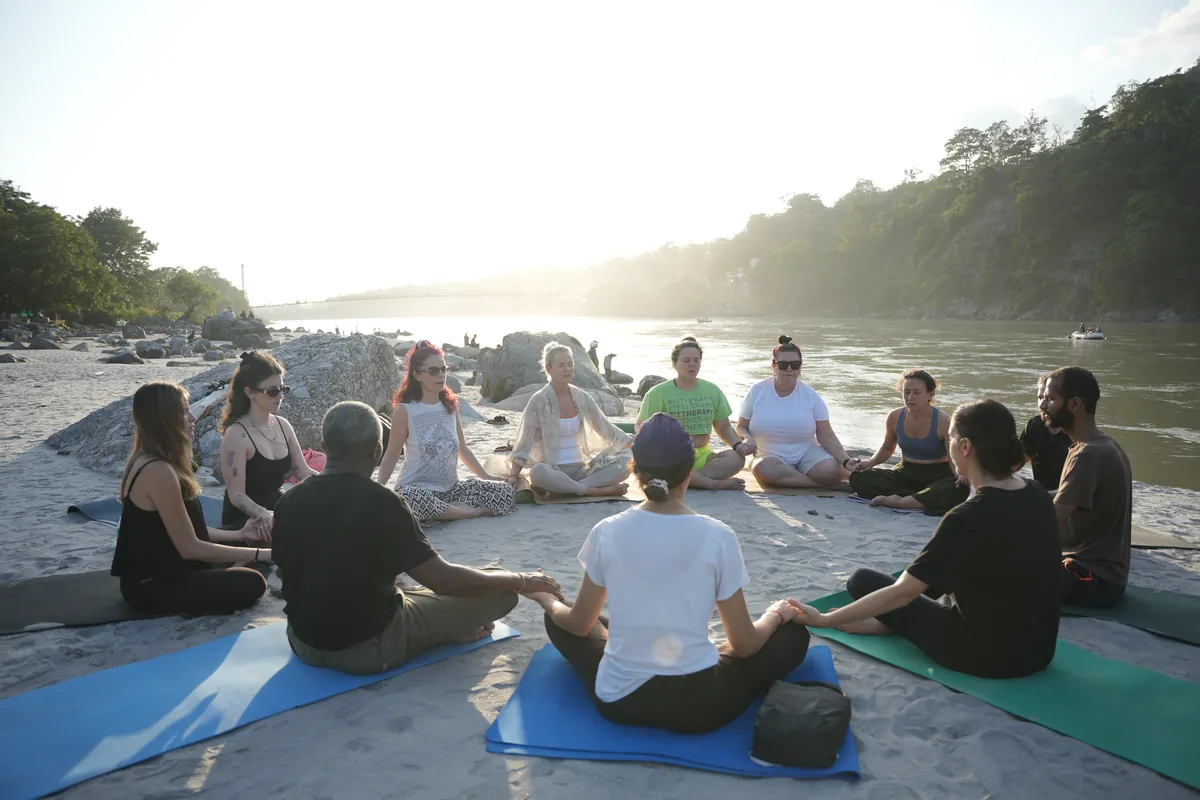
Yoga for mind, body and soul
Breathe, stretch, balance, blossom. Seekers from all over the world practise with us beside Mother Ganga.
Not sure which course fits your budget and level?
Talk to a teacher before you book. You will get a straight answer about which course actually suits you, and no pressure to take it.

